
On rainy days or when a typhoon is approaching,
“I get a headache.”
“My neck and shoulders feel heavy.”
“My body feels sluggish.”
“I just can’t get motivated.”
Have you ever felt unwell like this?
Physical discomfort caused by changes in the weather like this is sometimes called “weather-related illness” (known in Japan as kishobyo).
In recent years it has been covered more and more often on TV and in the news, and it is a problem that troubles many people.
Why does weather-related illness happen?
Weather-related illness is thought to be caused in part by sudden changes in air pressure, temperature and humidity that throw the autonomic nervous system off balance.
In recent years, the “inner ear” has drawn attention as one of the triggers.
The inner ear not only lets us hear but also helps us keep our balance. It is also thought to act like a sensor that detects changes in air pressure.
When air pressure changes due to low-pressure systems or typhoons, the signal travels from the inner ear to the brain and affects the autonomic nervous system, which can lead to various kinds of discomfort such as:
• Headaches
• Neck and shoulder stiffness
• Dizziness
• Sluggishness
• Tiring easily
• Reduced focus
and more.
Of course, not everyone experiences symptoms, but people who already have stiff shoulders, are under a lot of stress or have an easily disrupted autonomic nervous system are said to be more susceptible.
Tension in the neck and shoulders can also play a role
When changes in air pressure disrupt the autonomic nervous system, the muscles of the neck and shoulders can tense up more easily.
In addition, if strain has built up in your neck and shoulders from desk work or smartphone use, you may feel discomfort such as a heavy head or neck and shoulder stiffness even more during weather-sensitive periods.
What you can do day to day
It is said to be difficult to prevent weather-related illness completely, but it is important to keep your body in good condition every day.
For example:
• Get enough sleep
• Do light stretching or go for walks
• Keep your body from getting chilled
• Aim for a regular daily routine
• Don’t let fatigue build up too much
Habits like these are also thought to help keep the autonomic nervous system balanced.
What we value at La HEAD
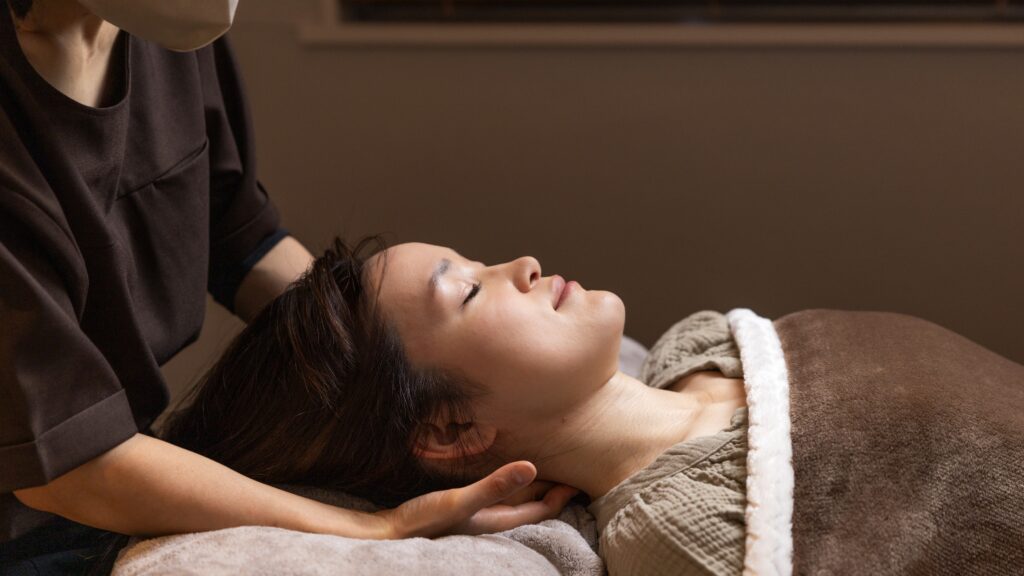
At La HEAD, drawing on years of hands-on experience and knowledge of the body gained at an osteopathic clinic, we treat not only the head but also the neck, shoulders, back of the head and arms.
We carefully loosen the neck and shoulders, which tend to bear the strain of changes in air pressure, and we value offering time when you can relax all the way up to your head.
While our treatment is not a cure for weather-related illness itself, our guests have told us things like:
“I came because the heaviness in my head on rainy days was bothering me.”
“My head felt lighter.”
“My neck and shoulders felt looser, and I feel refreshed.”
We are grateful to hear comments like these.
You can’t change the weather, but you can care for your body
We can’t change the weather.
But we can care for our bodies every day and make time to relax body and mind.
“My head and neck hurt whenever it rains.”
“My body somehow feels heavy at this time of year.”
If that sounds like you, why not make a conscious effort to set aside time for yourself, even in the middle of busy days?