
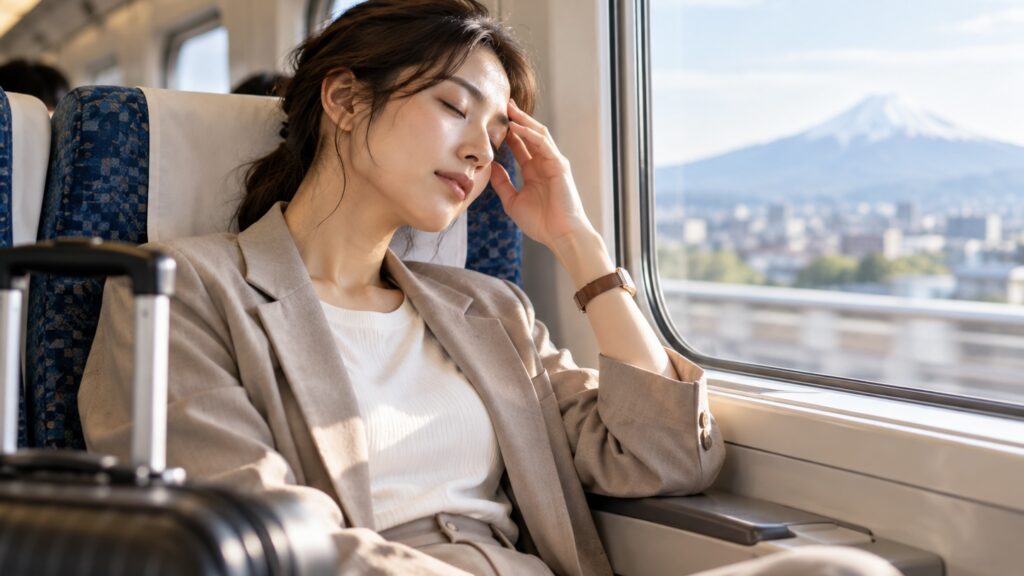
After a long plane or bullet train ride for travel or work, have you ever felt, “I was only sitting, so why am I so tired?”
Even without moving much, your shoulders and neck may feel heavy, your head may feel foggy, or you may feel very sleepy.
In fact, fatigue from long-distance travel is not just tired muscles. It is thought to involve many bodily functions, including sleep, how the brain works and blood flow.
In 2026, a research review that brought together the effects of long-distance travel on body and mind was published, drawing renewed attention to the topic.
Here, based on the latest research, we explain why travel alone can leave you tired, and how to ease the strain.
What a 2026 Study Found About the Effects of Long-Distance Travel
In March 2026, the journal Sports published a research review analyzing the effects of long-distance travel on the body.
This review analyzed 89 studies on long-distance travel and summarized how travel affects body and mind.
Beyond travel-related fatigue, the studies reported changes such as the following:
• Increased feelings of fatigue
• Changes in sleep duration and sleep quality
• Reduced physical performance
• Changes in mood and state of mind
• Changes in concentration and cognitive function
Some studies also reported changes related to blood pressure, hormones and the autonomic nervous system.
In other words, long-distance travel may place strain not only on the body, but also on the brain and on sleep.
However, many of these studies focused on athletes, and ordinary travelers may not be affected to the same degree.
Why Does the Body Get Tired When You’re Just Sitting?
One reason long-distance travel is tiring is spending long periods in the same position.
On a plane or bullet train, it is not unusual to spend several hours sitting in your seat.
Yet the body normally relies on moderate movement to keep the muscles and blood circulation working.
The calf muscles in particular act like a pump that sends blood in the legs back to the heart.
When you stay seated for a long time, these muscles work less, and blood in the legs is more likely to pool.
This can lead to swelling and a heavy, tired feeling in the legs.
Depending on how you sit, the muscles of the neck, shoulders and lower back can also come under strain.
Not moving your body does not necessarily mean your body is under no strain.
Long periods of sitting are also linked to the risk of venous thrombosis, so moving your body regularly is recommended, especially on long journeys.
Can Long-Distance Travel Affect the Brain and Sleep?
Long-distance travel can bring changes not only to the body, but also to sleep and concentration.
The research review published in 2026 also covered changes in sleep and effects on cognitive function that come with long-distance travel.
For example, an early-morning departure can cut your sleep short, and noise, vibration and unfamiliar surroundings during travel can keep you from resting properly.
Lack of sleep is known to affect attention, concentration and judgment.
That is why, when you feel foggy or can’t focus on work after a long journey, lack of sleep and changes in your resting environment during travel may be part of the reason.
Psychological strain, such as being mindful of the people around you or feeling tense while traveling, is also thought to play a part in fatigue.
Even if you think you are resting by sitting during the journey, you may not actually be getting enough rest.
However, not every mechanism by which travel may directly tire the brain itself has been made clear.
Tired Even Without Jet Lag? How Travel Fatigue Differs from Jet Lag
When it comes to tiredness from long-distance travel, many people may think of jet lag from traveling abroad.
However, travel fatigue and jet lag are different things.
Jet lag happens when you cross several time zones in a short time, and your body clock falls out of sync with the local time.
Travel fatigue, on the other hand, comes from the physical and psychological strain of long journeys themselves.
That is why travel fatigue can occur even on domestic trips with no time difference.
For example, even on a bullet train from Tokyo to Osaka or a domestic flight, long periods of sitting, lack of sleep and the travel environment can leave you feeling tired.
A research review published in Sports Medicine in 2026 also cited long periods of sitting, lack of sleep, dehydration and stress as factors linked to travel fatigue.
In other words, even if you are not traveling abroad, the journey itself may place a burden on body and mind.
What You Can Do to Ease Fatigue from Long-Distance Travel
To reduce the strain of long-distance travel, how you spend your time during the journey, and resting before and after it, are important.
Here are some measures that are easy to bring into daily life.
1. Move your body regularly
Avoid sitting for long stretches, and if you can, stand up and walk around.
Even while seated, moving your ankles up and down and working your calf muscles can help.
2. Drink enough water
It is easy to forget to drink water while traveling.
The air inside a plane cabin is especially dry, so pay attention to signs such as a dry throat and drink water often.
3. Keep a posture that is easy on your neck and shoulders
Using a smartphone or computer for long periods tends to put strain on the neck and shoulders.
It is important to change position from time to time and not stay in the same posture.
4. Make sleep a priority before and after travel
If an early departure or a late-night return leaves you short on sleep, you may feel more tired.
Before and after a journey, try to get as much sleep as you need.
5. Make time to relax after you arrive
On trips and business travel, it is easy to pack your schedule even after you arrive.
After a long journey, though, it is also important to make time to move your body gently or rest in a calm environment.
Even when it looks like you are doing nothing, long-distance travel can place many kinds of strain on body and mind.
What matters is not only dealing with tiredness once you feel it, but reducing the strain on your body during the journey and getting enough rest afterward.
At La HEAD, we carefully care for the head, neck and shoulders, which tend to tense up with daily work and life, and we value giving you time to relax fully in body and mind.
If your days are busy with travel or business trips, why not make a little time to take care of your body?