
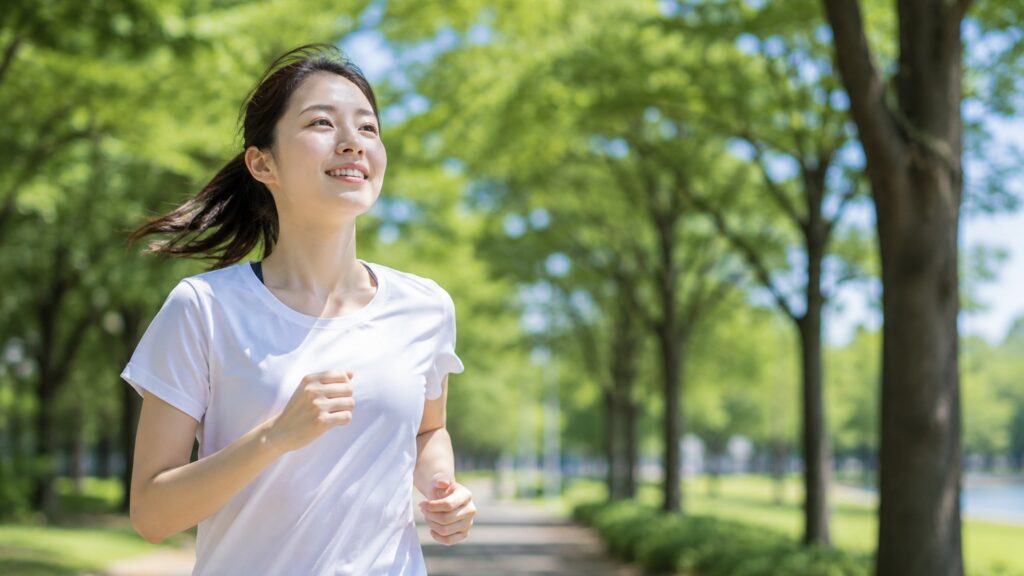
When it comes to preventing heatstroke, many people probably think of drinking water frequently and using the air conditioner.
Of course, these are essential measures for preventing heatstroke.
However, when it comes to building a body that is less prone to heatstroke, regular exercise is also extremely important.
In fact, muscle is the tissue that holds the most water in the body, and continuing to exercise helps the body adapt so that it copes better with heat.
In this article, we draw on research data to explain why exercise helps prevent heatstroke.
Muscle Is the Body’s “Water Reservoir”
About 60% of the human body is water.
Skeletal muscle in particular is about 75% water, making muscle the tissue that holds the most water in the body.
This means that the less muscle mass a person has, the less water their body can store.
In fact, the National Academies of Sciences, Engineering, and Medicine in the U.S. reports that total body water decreases as muscle mass declines, and that the risk of dehydration rises, especially in older adults.
In other words, maintaining muscle mass also helps maintain the water in your body.
Exercise Makes Your Body Better at Handling Heat
The benefits of exercise go beyond muscle mass.
According to the American College of Sports Medicine (ACSM), continuing moderate exercise in a hot environment triggers an adaptation in the body called heat acclimatization.
As heat acclimatization progresses:
• you start sweating sooner
• you sweat more, which makes it easier to lower body temperature
• your sweat contains less sodium, so you lose fewer electrolytes
• the strain on your heart is reduced
In these ways, the body changes so that it can regulate its temperature more efficiently.
As a result, many studies have confirmed that the risk of heatstroke can be reduced.
Japan’s Ministry of the Environment Also Recommends Heat Acclimatization
Japan’s Ministry of the Environment and the Japan Sport Association also recommend getting the body used to heat before the hot season arrives.
Specifically, activities such as
• walking
• light jogging
• cycling
• light strength training
are recommended for about 20-30 minutes, on a regular basis.
Heat acclimatization is generally said to develop over a few days to about two weeks, so it’s important to build an exercise habit before the height of summer arrives.
Staying Hydrated Alone Isn’t Enough
When we think about preventing heatstroke, we tend to focus on what to drink.
Of course, hydration is important, but on its own it doesn’t raise the body’s own tolerance to heat.
By keeping up moderate exercise in daily life and focusing on these two things,
• maintaining muscle mass
• promoting heat acclimatization
you can build a body that stands up better to the heat.
Summary
Preventing heatstroke is not just about staying hydrated.
By continuing to exercise,
• you maintain muscle mass, making it easier for your body to retain water
• heat acclimatization improves your body’s ability to regulate temperature
These are the two benefits you can expect.
The truly hot season is just around the corner.
Along with staying hydrated, why not build an exercise habit at a comfortable pace and aim for a body that can stand up to heatstroke?